 BestPriceDeal.in
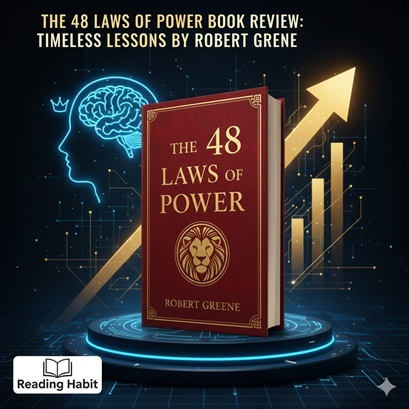
Few books have sparked as much fascination, debate, admiration, and controversy as The 48 Laws of Power by Robert Greene. First published in 1998, this book has remained remarkably relevant across decades, industries, and cultures.
Whether praised as a manual for strategic thinking or criticized as morally cold, one thing is undeniable: The 48 Laws of Power forces readers to confront the reality of power as it actually operates, not as we wish it would.
What Is The 48 Laws of Power About
At its core, The 48 Laws of Power is a study of power dynamics. It examines how power is gained, maintained, defended, and lost in human relationships, institutions, and history.
Rather than presenting abstract theory, Robert Greene draws from:
-
Historical figures
-
Political leaders
-
Military strategists
-
Court intrigues
-
Philosophers and thinkers
Each law is supported by stories, examples, and counterexamples, making the book both educational and provocative.
The Central Philosophy of the Book
The book operates on one central assumption:
Power is an inevitable part of human interaction.
Whether in:
-
Workplaces
-
Politics
-
Social circles
-
Families
-
Business environments
Power dynamics exist, whether acknowledged or ignored.
Greene argues that pretending power does not exist leaves people vulnerable. Understanding power, on the other hand, allows individuals to navigate reality with awareness rather than naivety.
Structure of The 48 Laws of Power
The book is divided into 48 distinct laws, each presented in a consistent format:
-
The law stated clearly
-
A historical illustration
-
Analysis and interpretation
-
A reversal or exception
-
Psychological insight
This structure makes the book:
-
Easy to reference
-
Suitable for slow, reflective reading
-
Ideal for rereading over time
It is not meant to be rushed.
Key Themes Explored in the Book
Although there are 48 laws, several recurring themes unify them.
Power and Perception
One of the strongest themes in the book is that perception often matters more than reality.
Greene repeatedly shows that:
-
How you are seen affects how you are treated
-
Appearances influence trust, fear, and respect
-
Visibility and mystery can be strategic tools
Power, in many cases, operates through psychological influence rather than force.
Human Nature Is Predictable
Another major theme is that human behavior, though complex, follows recognizable patterns.
The book highlights tendencies such as:
-
Envy
-
Pride
-
Fear
-
Desire for recognition
-
Sensitivity to disrespect
Understanding these tendencies allows one to anticipate reactions and avoid unnecessary conflict.
Strategy Over Emotion
Greene consistently emphasizes strategic thinking over emotional reactions.
Many laws warn against:
-
Acting out of anger
-
Revealing insecurity
-
Seeking revenge impulsively
Power is often lost not through lack of intelligence, but through lack of emotional control.
Morality Versus Reality
Perhaps the most controversial theme is the book’s stance on morality.
Greene does not present the laws as morally good or bad. Instead, he presents them as observations of how power has historically functioned.
This approach makes readers uncomfortable, but intentionally so.
Why The 48 Laws of Power Is So Controversial
The book has often been labeled as:
-
Manipulative
-
Cynical
-
Machiavellian
-
Amoral
Critics argue that it encourages unethical behavior.
Supporters argue that:
-
The book describes reality, not ideals
-
Awareness prevents exploitation
-
Ignorance of power is more dangerous than knowledge of it
The controversy itself is part of the book’s enduring relevance.
Is The Book Teaching Manipulation
This is one of the most common questions.
The answer depends on the reader.
The book does not force behavior. It reveals patterns.
Like a knife, the knowledge can be used to:
-
Defend
-
Protect
-
Build
-
Or harm
Greene repeatedly notes that understanding power does not require abusing it.
Who Should Read The 48 Laws of Power
This book is not for everyone at every stage of life.
It is particularly valuable for:
-
Leaders and managers
-
Entrepreneurs
-
Professionals navigating office politics
-
Students of history and psychology
-
People who feel repeatedly undermined or overlooked
It may be challenging for readers seeking purely inspirational or moral guidance.
Practical Value in Modern Life
Despite being rooted in history, the book remains practical today.
In modern settings, its insights apply to:
-
Corporate hierarchies
-
Workplace dynamics
-
Negotiations
-
Leadership roles
-
Public influence
The language of courts and kings translates surprisingly well to emails, meetings, and power structures in organizations.
Strengths of The 48 Laws of Power
The book has several undeniable strengths.
1 Deep Historical Research
Greene’s use of historical examples is one of the book’s greatest strengths.
The stories:
-
Make abstract ideas concrete
-
Show long term consequences of power missteps
-
Provide cross cultural insight
The depth of research gives the book credibility and weight.
2 Clear and Memorable Laws
Each law is concise and memorable.
Readers often remember specific laws long after reading, which makes the book impactful and practical.
3 Psychological Insight
The book demonstrates a strong understanding of:
-
Ego
-
Fear
-
Motivation
-
Social behavior
This psychological depth is why the book resonates across professions.
4 Timelessness
Unlike many self help books tied to trends, The 48 Laws of Power feels timeless.
Human nature has not changed, even as technology has.
Criticisms and Limitations
A fair review must acknowledge limitations.
1 Lack of Moral Framework
The book intentionally avoids moral judgment, which can be unsettling.
Some readers may:
-
Misinterpret laws as instructions rather than observations
-
Apply them without ethical consideration
The book requires maturity and discernment.
2 Not Suitable for Emotional Vulnerability
Readers in emotionally fragile states may find the book:
-
Cold
-
Overwhelming
-
Distrust inducing
It is better read as a tool for awareness, not a guide for personal worth.
3 Overgeneralization Risk
While patterns are real, not every situation fits every law.
Rigid application without context can:
-
Damage relationships
-
Create unnecessary suspicion
Greene himself warns against blind application.
The Importance of Reading the Reversals
One of the most overlooked aspects of the book is the reversal section in each law.
These sections explain:
-
When a law should not be applied
-
Situations where breaking the law is wiser
This nuance is crucial and often ignored by critics.
How to Read The 48 Laws of Power Correctly
The best way to approach the book is:
-
Slowly
-
Reflectively
-
With self awareness
It is not a checklist to execute, but a map to understand power dynamics.
Ask:
-
Where have I seen this law play out
-
How have I benefited or suffered from it
-
How can awareness help me act wisely
The Book’s Cultural Impact
Over the years, The 48 Laws of Power has influenced:
-
Business leaders
-
Artists and musicians
-
Athletes
-
Political thinkers
Its presence in popular culture speaks to its resonance with real human experience.
Lessons Beyond Power
Ironically, one of the book’s greatest lessons is not about gaining power, but about:
-
Avoiding unnecessary conflict
-
Recognizing manipulation early
-
Protecting personal boundaries
-
Choosing battles wisely
In this sense, the book can increase peace, not just ambition.
Is The 48 Laws of Power Still Relevant Today
Yes, arguably more than ever.
In an era of:
-
Social media influence
-
Corporate competition
-
Information overload
-
Image driven success
Understanding power dynamics is no longer optional.
The book equips readers with clarity instead of illusion.
Final Verdict
A Powerful Book That Demands Responsibility
The 48 Laws of Power is not a feel good book. It is a truth exposing book.
It does not tell readers who to become.
It shows them how the world often works.
Read responsibly, it becomes:
-
A shield against manipulation
-
A guide to strategic thinking
-
A lesson in self control
Read irresponsibly, it can become:
-
A justification for ego
-
A misuse of influence
Ultimately, the book gives knowledge.
What you do with that knowledge defines your character.