 BestPriceDeal.in
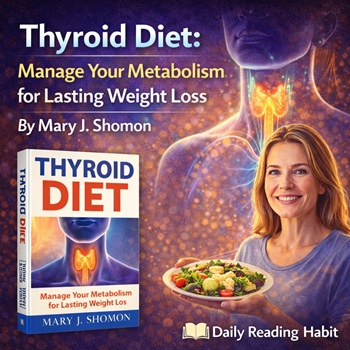
The Thyroid Diet: Manage Your Metabolism for Lasting Weight Loss (A Comprehensive Review)
For millions of people living with hypothyroidism or Hashimoto’s, the bathroom scale is a source of constant frustration. You eat like a bird, you exercise until you’re exhausted, and yet the needle doesn’t move—or worse, it creeps upward. This “metabolic trap” is exactly what Mary J. Shomon addresses in her groundbreaking book, “The Thyroid Diet: Manage Your Metabolism for Lasting Weight Loss.”
As a world-renowned patient advocate, Shomon doesn’t just write from a clinical perspective; she writes from the trenches. Diagnosed with Hashimoto’s in 1995, she spent decades uncovering why standard “calories in, calories out” advice fails thyroid patients.
1. The Core Philosophy: Why Thyroid Weight is Different
The fundamental premise of the book is that thyroid-related weight gain isn’t a “willpower” issue—it’s a hormonal one. The thyroid is the master gland of metabolism. When it underperforms, every cell in your body slows down.
Shomon explains that while your doctor might say your labs are “normal,” you may not be optimally treated. The book differentiates between being “in range” and “feeling well,” a distinction that has made Shomon a hero in the thyroid community. She argues that without the right balance of T3 (the active hormone) and T4 (the storage hormone), weight loss is biologically nearly impossible.
2. The “Metabolic Checkup”: Could You Have a Problem?
A significant portion of the book serves as a diagnostic guide. Shomon provides checklists for readers to determine if they are undiagnosed or undertreated.
-
The TSH Debate: She dives into why the standard TSH (Thyroid Stimulating Hormone) test might be missing millions of sufferers.
-
The Role of Reverse T3: The book explains how stress can cause your body to produce “Reverse T3,” which effectively slams the brakes on your metabolism.
-
Secondary Factors: She explores how insulin resistance, leptin resistance, and cortisol imbalances often piggyback on thyroid issues, creating a “perfect storm” for weight gain.
3. The Nutritional Strategy: What to Eat
Shomon doesn’t offer a one-size-fits-all meal plan. Instead, she offers a “Thyroid Diet Revolution” framework. Key nutritional pillars include:
-
Low-Glycemic Focus: Since thyroid patients are prone to insulin resistance, Shomon emphasizes low-GI foods to keep blood sugar stable.
-
The Goitrogen Question: She addresses the controversial topic of “goitrogenic” vegetables (like kale, broccoli, and cabbage) and explains how to eat them safely (usually cooked) without suppressing thyroid function.
-
High Fiber, High Protein: To combat the slow digestion (constipation) common in hypothyroidism, she advocates for a high-fiber approach, paired with adequate protein to prevent muscle wasting.
4. Supplements and “Metabolism Boosters”
One of the most valuable sections for many readers is the deep dive into supplements. Shomon reviews:
-
Selenium and Zinc: Essential minerals for the conversion of T4 to T3.
-
Iodine: The double-edged sword of thyroid health. She warns against blind supplementation which can actually trigger autoimmune flares.
-
Herbal Support: An objective look at Ashwagandha, Guggul, and other traditional “metabolism boosters.”
5. The Exercise Paradox: Less is Sometimes More
In a refreshing take, Shomon warns thyroid patients against “over-exercising.” Intensive cardio can sometimes spike cortisol and further deplete an already struggling thyroid. Instead, she recommends:
-
Strength Training: Building muscle is the only way to permanently raise a sluggish basal metabolic rate (BMR).
-
Restorative Movement: Yoga and Tai Chi to manage the stress that often causes “thyroid belly” fat.
6. Critical Review: The Pros and Cons
Pros:
-
Empowerment: It gives patients the vocabulary to talk to their doctors.
-
Holistic: It covers sleep, stress, and environment—not just food.
-
Updated Science: The latest editions include info on newer medications and the “Thyroid Reset” approach.
Cons:
-
Information Overload: At 500+ pages, it can be overwhelming for those suffering from “brain fog.”
-
Medical Complexity: Some sections on hormone pathways require multiple readings to fully grasp.
7. Final Verdict: Is it Worth the Read?
If you have been told your “labs are fine” but you still can’t lose weight, this book is essential. Mary Shomon bridges the gap between conventional medicine and alternative wellness. It is not a “quick fix” book; it is a textbook for a new way of living with a chronic condition.
Rating: 4.5/5 Stars