Best seller

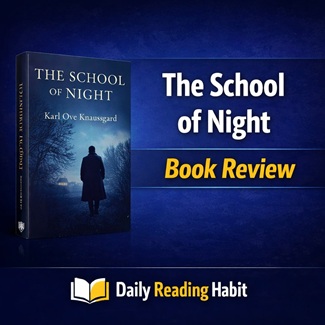
The School of Night Book Review | Karl Ove Knausgaard

Amazon India
Deal Score0
₹656 ₹999 GET DEAL
Deal Score0
₹656 ₹999 GET DEAL

Karl Ove Knausgaard’s Exploration of Art, Darkness, and Meaning

Few contemporary writers provoke as much intellectual curiosity and emotional depth as Karl Ove Knausgaard. Known globally for his introspective and boundary-breaking literary works, Knausgaard consistently challenges how readers think about identity, creativity, and existence. The School of Night continues this tradition, offering a reflective and philosophical journey into art, darkness, and the human search for meaning.

Rather than following a conventional narrative, The School of Night reads like a meditative exploration of ideas. It is a book that invites readers to slow down, question assumptions, and confront uncomfortable truths about creativity, culture, and the self. This in-depth review examines the book’s themes, structure, strengths, and limitations, and explains why it resonates strongly with readers who value thoughtful, challenging literature.


Introduction: A Book That Asks More Than It Answers

The School of Night is not a book designed to entertain in the traditional sense. It does not rely on plot twists or dramatic storytelling. Instead, it invites readers into a contemplative space where questions matter more than answers.

Knausgaard explores how art emerges from darkness, silence, and uncertainty. He examines how modern life, with its constant distractions and emphasis on productivity, often disconnects people from deeper creative and existential experiences. This book asks readers to reconsider their relationship with art, literature, and inner life.


About the Author: Karl Ove Knausgaard

Karl Ove Knausgaard is a Norwegian writer best known for his autobiographical literary project My Struggle, which brought him international recognition. His writing is marked by honesty, philosophical depth, and a willingness to explore uncomfortable emotional territory.

In The School of Night, Knausgaard moves away from autobiography and toward cultural and philosophical reflection. However, his signature introspective voice remains central. He writes not as an authority delivering conclusions, but as a thinker engaged in an ongoing search for meaning.


What Is The School of Night About?

At its core, The School of Night is a collection of essays and reflections that examine art, literature, music, and human consciousness. The book takes its title from a historical term associated with intellectual and artistic exploration, symbolizing a place where ideas are shaped in darkness rather than clarity.

Knausgaard reflects on topics such as:

  • The nature of creativity

  • The role of darkness and silence in art

  • The loss of mystery in modern culture

  • The tension between inner life and external expectations

Rather than offering clear arguments, the book unfolds as a series of thoughtful inquiries. Each chapter builds on the idea that meaningful art often arises from uncertainty, solitude, and discomfort.


Central Themes in The School of Night

1. Darkness as a Source of Creativity

One of the book’s most compelling ideas is that darkness is not something to avoid, but something to engage with. Knausgaard argues that true creativity often emerges from emotional depth, solitude, and even despair.

In contrast to modern culture’s obsession with positivity and productivity, the book suggests that darkness allows artists to access deeper truths. Silence, boredom, and inner conflict become essential conditions for meaningful creation.


2. The Decline of Inner Life in Modern Society

Knausgaard expresses concern about how modern life diminishes reflection. Constant connectivity, digital distractions, and external validation leave little room for silence or contemplation.

The School of Night challenges readers to recognize how this loss of inner space affects creativity, empathy, and self-awareness. According to the author, when people lose touch with their inner lives, art becomes shallow and experience becomes fragmented.


3. Art Beyond Explanation

Another recurring theme is the idea that art cannot always be explained or justified. Knausgaard resists the urge to analyze art purely through theory or ideology. Instead, he emphasizes art’s emotional and existential power.

The book suggests that art should be experienced rather than decoded. When art is forced into rigid interpretations, it loses its ability to surprise, disturb, and transform.


4. The Role of the Artist

Knausgaard explores what it means to be an artist in the modern world. He questions whether artists still have the freedom to explore difficult ideas without being shaped by markets, trends, or political expectations.

The artist, in this view, is someone who remains open to uncertainty and resists simplification. The School of Night presents creativity as a moral and existential responsibility rather than a career choice.


Writing Style and Structure

The writing style of The School of Night is reflective, slow, and deeply intellectual. The prose is clear but dense with ideas. Readers are encouraged to pause, re-read, and think rather than rush through the text.

The structure is non-linear. Essays move between personal observation, cultural critique, and philosophical reflection. This can feel challenging for readers expecting a traditional narrative, but it suits the book’s contemplative purpose.


Emotional and Intellectual Impact

Reading The School of Night is an immersive experience. The book does not aim to comfort or entertain but to provoke thought and self-examination.

Many readers describe feeling intellectually stimulated yet unsettled. The book invites discomfort by questioning assumptions about success, creativity, and meaning. For readers open to introspection, this discomfort becomes a powerful source of insight.


Strengths of the Book

Depth and Originality

Knausgaard offers original perspectives on creativity and culture that resist simplification.

Philosophical Honesty

The book avoids easy answers and embraces uncertainty, which adds authenticity to its reflections.

Literary Quality

The prose is precise, thoughtful, and emotionally resonant without being overly abstract.

Relevance to Modern Life

Despite its philosophical nature, the book speaks directly to contemporary struggles with distraction, identity, and meaning.


Limitations to Consider

The School of Night may feel demanding for some readers. Its reflective style requires patience and attention.

Readers seeking a clear argument, practical advice, or a fast-paced narrative may find the book challenging. The lack of structure can feel disorienting, especially for those unfamiliar with philosophical or essay-based writing.

However, these qualities are also what make the book unique.


Who Should Read The School of Night?

This book is ideal for:

  • Readers interested in philosophy, art, and literature

  • Writers and creative thinkers

  • Readers who enjoy slow, reflective reading

  • Those questioning modern culture and personal identity

It is best suited for readers who value depth over entertainment and are comfortable with ambiguity.


Comparison with Other Works by Knausgaard

Unlike My Struggle, which is deeply autobiographical, The School of Night focuses more on ideas than personal narrative. However, both share a commitment to honesty and introspection.

This book also aligns with Knausgaard’s broader literary project of exploring human consciousness without filters or simplifications.


Key Takeaways from The School of Night

Some lasting ideas readers may take from the book include:

  • Creativity requires silence and discomfort

  • Darkness is not the enemy of meaning

  • Art should resist easy explanations

  • Inner life is essential to human depth

These insights linger long after the final page.


Final Verdict

The School of Night by Karl Ove Knausgaard is a demanding but deeply rewarding book. It challenges readers to rethink creativity, art, and the role of darkness in shaping meaning.

This is not a book for everyone, but for those willing to engage with complex ideas and slow reflection, it offers rare intellectual richness. Rather than providing answers, it teaches readers how to sit with questions—a skill increasingly rare in modern life.

Overall Rating: 4.5 out of 5

BestPriceDeal.in
Online Shopping Offers
Logo