 BestPriceDeal.in
Introduction: The Complexity Crisis in Fitness
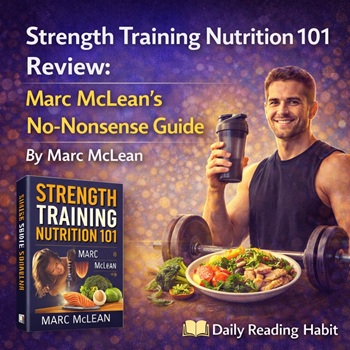
The fitness industry thrives on confusion. Every week, a new “superfood” is crowned, or a specific macronutrient is vilified. For the average person looking to get stronger and leaner, this “paralysis by analysis” is the biggest barrier to success. Enter Marc McLean and his book, “Strength Training Nutrition 101.”
McLean’s philosophy is built on a single, refreshing premise: Nutrition for strength doesn’t have to be complicated. As a personal trainer and health journalist, McLean has stripped away the “bro-science” to provide a manual that is as much about psychology as it is about calories.
1. The Core Principles of “Nutrition 101”
McLean divides the book into digestible pillars. Unlike academic textbooks, he focuses on what actually moves the needle for natural lifters.
-
The Consistency Commandment: McLean argues that a “perfect” diet followed for a week is useless compared to a “good” diet followed for a year.
-
The 80/20 Rule: He advocates for eating whole, nutrient-dense foods 80% of the time, allowing for flexibility in the remaining 20% to prevent burnout.
-
Whole Food Priority: The book emphasizes that supplements are the “cherry on top,” not the foundation.
2. Demystifying Macronutrients
One of the strongest sections of the book is McLean’s breakdown of macros. He avoids the complex formulas that require a calculus degree, instead offering a simplified approach:
-
Protein: The Building Block
-
Why protein is essential for muscle repair (hypertrophy).
-
Calculating your protein needs without stress.
-
The best sources for both meat-eaters and vegetarians.
-
-
Carbohydrates: The Energy Engine
-
The difference between simple and complex carbs.
-
Why low-carb diets often fail strength athletes.
-
Timing your carbs for maximum workout performance.
-
-
Fats: The Hormonal Regulator
-
The role of healthy fats in testosterone production.
-
Why “fat-free” is often a trap for those looking to gain muscle.
-
3. The Myth-Busting Section
McLean takes a sledgehammer to some of the most common myths in the gym world. This section adds significant value for beginners who may be wasting money on unnecessary products.
-
The “Anabolic Window”: Does it really matter if you drink your shake within 30 minutes of your workout? (Spoiler: Not as much as you think).
-
The Supplement Scam: A critical look at pre-workouts, fat burners, and BCAA’s. McLean identifies which 2-3 supplements actually have scientific backing.
-
Meal Frequency: Do you really need to eat six small meals a day to “keep the metabolic fire burning”?
4. Practical Application: Meal Planning and Prep
A review of a nutrition book wouldn’t be complete without looking at how it helps you in the kitchen. McLean provides:
-
Simple Meal Templates: Not just rigid recipes, but frameworks you can adapt to your taste.
-
The Art of Batch Cooking: How to save hours during the week by prepping smart on Sundays.
-
Grocery Store Strategy: How to navigate the aisles to avoid processed temptations.
5. The “Strength” Element: Fueling for Performance
This isn’t just a weight loss book; it’s a strength book. McLean explains the biological requirements for lifting heavy weights.
-
Pre-Workout Fuel: What to eat 1-2 hours before the gym to avoid “crashing.”
-
Post-Workout Recovery: How to optimize the window of muscle protein synthesis.
-
Hydration: The often-overlooked factor that can decrease strength by up to 10% if ignored.
6. Pros and Cons: An Honest Assessment
The Pros:
-
Clarity: The writing is conversational and free of unnecessary jargon.
-
Actionability: You can finish the book in an afternoon and start the diet that evening.
-
Cost-Effective: He shows you how to eat for muscle on a budget.
The Cons:
-
Too Basic for Pros: If you are a competitive bodybuilder, the “101” level might be too simplistic.
-
Minimal Recipes: It’s more of a “how-to” guide than a cookbook. You’ll need to look elsewhere for specific gourmet recipes.
7. Comparison: How it Stands Against Other Fitness Books
While books like The Renaissance Diet are deep-dives into science, Strength Training Nutrition 101 sits comfortably alongside Bigger Leaner Stronger by Michael Matthews. It is the “entry point” for anyone who has ever felt intimidated by a calorie-counting app.
8. Final Verdict: Who Should Buy This Book?
If you are tired of “fitness influencers” selling you expensive tea and 12-step supplement programs, this book is for you. It’s for the person who wants to see their deadlift go up and their body fat go down without making fitness their entire personality.
Final Rating: 4.8/5 Stars