 BestPriceDeal.in
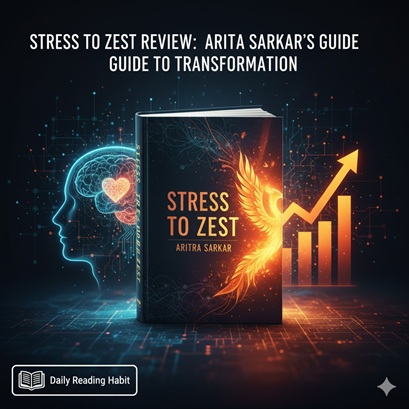
In the high-pressure environment of 2026, where the lines between professional life and personal peace are increasingly blurred, a new voice has emerged to guide us through the chaos. Aritra Sarkar’s “Stress to Zest: Stories and Lessons for Personal Transformation” has quickly become a cornerstone for those seeking to reclaim their vitality.
This is not just another self-help book filled with toxic positivity. Instead, it is a grounded, narrative-driven exploration of how stress—the very thing we try to avoid—can be the catalyst for our most profound growth. In this deep dive, we review the core philosophies, the transformative stories, and the actionable lessons contained within this modern masterpiece.
1. Introduction: The Zest Revolution
We live in an era of “perma-crisis.” From economic shifts to the rapid evolution of AI, the modern individual is under more cognitive load than any generation in history. Aritra Sarkar identifies this “Stress Epidemic” not as a medical failure, but as a disconnection from our “Zest”—our innate enthusiasm for life.
Stress to Zest serves as a bridge. It acknowledges that while we cannot always change our circumstances, we can fundamentally rewire our internal response to them. Sarkar’s writing is empathetic yet firm, blending the art of storytelling with the science of behavioral psychology.
2. The Core Framework: From Friction to Flow
Sarkar breaks down the transformation process into a logical progression. He argues that “Zest” is not a destination, but a state of being that occurs when we remove the “Stress Friction” in our lives.
The Three Pillars of Transformation:
-
Awareness: Identifying the specific triggers that move us from a state of calm to a state of survival.
-
Narrative Reframing: Changing the stories we tell ourselves about our stress (e.g., viewing a challenge as a “threat” vs. an “opportunity”).
-
Micro-Actions: Implementing tiny, non-negotiable habits that protect our energy reserves.
3. Reviewing the Stories: Relatable Human Experiences
What sets this book apart from academic texts is Sarkar’s use of storytelling. He introduces us to various characters—likely composites of real people—who find themselves at a breaking point.
The Corporate Climber
One story follows a high-level executive who has “everything” but feels a profound sense of emptiness. Sarkar uses this narrative to illustrate the concept of “Success Stress”—the burden of maintaining an image that no longer aligns with one’s soul.
The Creative Block
Another compelling chapter tells the story of an artist who lost their “spark” due to financial pressure. Through this lens, the author teaches us about “Cognitive Tunneling,” where stress narrows our vision so much that we can no longer see creative solutions.
The Lessons Learned
-
Vulnerability is Strength: Each character finds their breakthrough only after they stop pretending they have it all together.
-
The Power of “No”: A recurring theme is the necessity of setting boundaries to preserve one’s mental “Zest.”
4. Key Lessons for Personal Transformation
Aritra Sarkar doesn’t just tell stories; he provides a toolkit. Here are the most impactful lessons extracted from the book:
A. The “Stress Audit”
Sarkar suggests that most of us don’t actually know what is stressing us out. We feel a general sense of unease. He proposes a 7-Day Stress Audit where you track not just your tasks, but your energy levels after each task.
B. The 5-Minute Zest Buffer
In 2026, our calendars are back-to-back. Sarkar introduces the “Zest Buffer”—a mandatory 5-minute window between meetings or tasks to practice “Box Breathing” or “Mindful Observation.” This prevents the “compounding effect” of stress.
C. Radical Self-Compassion
Perhaps the most touching part of the book is the emphasis on being kind to oneself. Sarkar argues that “Self-Criticism is the ultimate Zest-Killer.” Transformation cannot happen in an environment of self-judgment.
5. Technical Analysis: Psychology & Neuroscience
While the book is accessible, it is clearly rooted in modern science. Sarkar touches upon:
-
Neuroplasticity: How we can literally “re-groove” our brains to favor calm over anxiety through repetitive practice.
-
The Vagus Nerve: The physical connection between our brain and our “gut feeling,” and how breathing exercises can instantly lower cortisol.
-
Dopamine vs. Serotonin: The difference between the “quick hit” of a social media notification (stress-inducing) and the “long burn” of a meaningful conversation (zest-inducing).
6. Comparison with Other Transformation Classics
How does Stress to Zest stack up against the titans of the genre?
| Feature | Stress to Zest | Atomic Habits | Man’s Search for Meaning |
| Primary Method | Storytelling & Reframing | Systemic Habits | Existential Purpose |
| Tone | Warm & Contemporary | Clinical & Practical | Philosophical & Intense |
| Best For | Burnout Recovery | Productivity Seekers | Crisis of Meaning |
7. The 2026 Perspective: Why Now?
The reason this book is ranking so highly on global reading lists in 2026 is its timeliness. We are in a post-digital-exhaustion phase. People are tired of “optimizing” and “hacking” their lives. They want to feel again.
Sarkar’s work resonates because it prioritizes the human experience over output. It tells the reader that it is okay to slow down—in fact, slowing down is the only way to accelerate toward a life of zest.
8. Summary of Actionable Steps
If you were to take the “Stress to Zest” journey today, here is the roadmap Sarkar provides:
-
Acknowledge the Friction: Stop ignoring the tightness in your chest or the irritability in your voice.
-
Audit Your Circle: Surround yourself with “Zest-Givers” rather than “Energy-Vampires.”
-
Find Your “Flow State”: Identify one activity (reading, gardening, coding) where time disappears and prioritize it weekly.
-
Practice Gratitude in Reverse: Instead of listing what you want, list the stressors you successfully navigated today.
9. Final Verdict: A Must-Read
“Stress to Zest” by Aritra Sarkar is a triumph of modern self-help. It is a book that doesn’t just stay on your shelf; it stays in your mind. It provides the linguistic tools to describe our internal struggles and the practical steps to overcome them.
If you feel like you are running on a treadmill that won’t stop, this book is the “off” switch. It is highly recommended for professionals, parents, and anyone feeling the weight of the modern world.