 BestPriceDeal.in
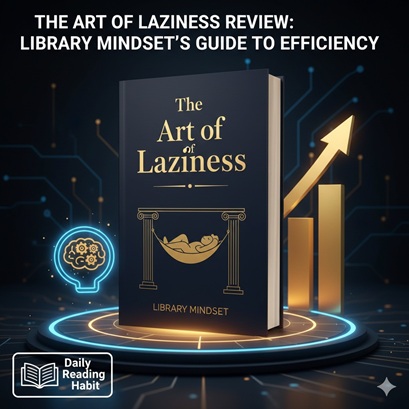
In a world that glorifies “hustle culture,” being called “lazy” is often seen as the ultimate insult. However, the popular digital creator known as Library Mindset has turned this concept on its head. In the book “The Art of Laziness,” the author explores a counterintuitive truth: that being “lazy” (in the right way) is actually the secret to peak productivity and mental clarity.
As we navigate 2026, where AI handles the busy work and human value lies in deep thinking, this book has become a manifesto for those who want to achieve more by doing less. This review dives into the “Art of Laziness” and how it provides a blueprint for sustainable success.
1. Introduction: Redefining Laziness for 2026
For decades, we’ve been told that “busy is a badge of honor.” If you aren’t working 80 hours a week, you aren’t trying. Library Mindset challenges this by distinguishing between “Unproductive Laziness” (procrastination) and “Productive Laziness” (efficiency).
“The Art of Laziness” argues that the most successful people are “lazy” because they refuse to waste energy on things that don’t matter. They automate, delegate, and eliminate so they can focus their limited energy on high-impact tasks.
2. The Core Philosophy: The Path of Least Resistance
The book is built on the foundation of The Pareto Principle (80/20 Rule). It suggests that 80% of your results come from 20% of your activities.
What is the “Art”?
-
Eliminating the Non-Essential: Learning the power of “No.”
-
Systemizing the Mundane: Using technology and habits to handle repetitive tasks.
-
Conserving Mental Energy: Treating your focus like a finite resource (digital gold).
3. Key Pillars of “The Art of Laziness”
I. The Power of Systems Over Goals
Library Mindset emphasizes that “winners and losers have the same goals.” The difference lies in their systems.
-
The Lazy System: Instead of relying on willpower (which is exhausting), create an environment where the right choice is the easiest choice.
-
Friction Management: If you want to work out, put your shoes by the bed. If you want to stop scrolling, put your phone in another room.
II. Intentional Procrastination
Not all procrastination is bad. The book teaches readers to “procrastinate” on low-value tasks. By delaying things that don’t move the needle, you leave room for the work that does.
III. The “Deep Work” Method
In 2026, the ability to focus is a superpower. The book encourages “lazy” periods of intense, undistracted work followed by long periods of true rest. This prevents the “half-working, half-resting” state that leads to burnout.
4. Actionable Lessons: How to be “Productively Lazy”
Library Mindset provides a toolkit for transforming your daily routine. Here are the standout lessons:
-
The 2-Minute Rule: If a task takes less than two minutes, do it now. This keeps your mental “to-do list” clear and prevents small stresses from piling up.
-
Batching Tasks: Don’t check email every ten minutes. Be “lazy” and only do it twice a day. This saves the energy lost to “context switching.”
-
Digital Minimalism: Our phones are the biggest energy drains. The book provides strategies to reclaim your attention from the “outrage economy” of social media.
-
Scheduled Boredom: Modern humans are afraid of being bored. However, boredom is where creativity is born. Library Mindset advocates for “doing nothing” as a productive act.
5. Review: Strengths and Weaknesses
Strengths:
-
Radical Simplicity: The writing style is punchy and direct, mirroring the philosophy of the book. It’s a quick read with zero fluff.
-
Highly Relatable: It speaks directly to the “burnt-out” professional and the overwhelmed student.
-
Practicality: Every chapter ends with a takeaway that you can implement immediately.
Weaknesses:
-
Not for Everyone: If you are in a survival phase of life (e.g., working three jobs to make ends meet), some of the “laziness” advice might feel like a luxury.
-
Broad Strokes: It focuses more on mindset than technical “how-to,” which might leave some readers wanting more specific software or tool recommendations.
6. The 2026 Context: Why “Laziness” is the Future
In the 2026 economy, AI is increasingly capable of performing “hard work.” What AI cannot do is prioritize and innovate.
By practicing the “Art of Laziness,” you free up the mental bandwidth required to be a “high-level architect” of your life rather than just a “builder.” The book teaches you to work on the business of your life, not just in it.
7. Comparison with Other Productivity Classics
| Feature | The Art of Laziness | The 4-Hour Workweek | Essentialism |
| Main Philosophy | Efficiency through Mindset | Lifestyle Design/Outsourcing | Discipline of Less |
| Effort Level | Low (Sustainable) | High (Initial Setup) | Moderate (Selective) |
| Tone | Modern/Digital Native | Aggressive/Entrepreneurial | Calm/Philosophical |
8. Summary of Actionable Steps
If you want to apply the “Library Mindset” today:
-
Identify your “20%”: What are the 2 tasks that give you the most results? Do those first.
-
Audit your “Busy Work”: List everything you do that feels like work but doesn’t produce results. Stop doing 3 of them today.
-
Embrace the “Drowsy State”: Use your evening for rest, not “revenge bedtime procrastination.”
-
Simplify your Environment: Remove 5 distractions from your workspace.
9. Conclusion: A Masterclass in Modern Focus
“The Art of Laziness” by Library Mindset is a refreshing antidote to the exhaustion of the 21st century. It reminds us that we are not machines designed for constant output. By embracing our natural desire for ease and channeling it into efficient systems, we can achieve a level of success that “hustlers” can only dream of.
It is a must-read for anyone who feels like they are working harder but moving slower. It’s time to stop grinding and start flowing.