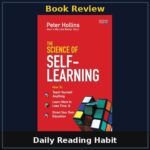
The Science of Self-Learning Book Review – Master Independent Learning by Peter Hollins
 BestPriceDeal.in
In today’s fast-paced world, the ability to learn independently is no longer optional—it is essential. Whether you are a student, entrepreneur, professional, or lifelong learner, the skill of self-learning determines how quickly you can adapt, grow, and succeed. “The Science of Self-Learning” by Peter Hollins is a powerful guide that explains how anyone can master the art of learning without constant supervision, expensive courses, or rigid academic systems. This book combines psychology, neuroscience, and practical exercises to help readers unlock their natural learning potential.
This in-depth review explores the key themes, strengths, weaknesses, and practical applications of the book so you can decide whether it deserves a place in your personal development library.
Introduction to the Book
The Science of Self-Learning is written with the intention of empowering readers to take control of their own education. Peter Hollins is known for producing practical self-improvement books that are easy to understand and grounded in research. In this book, he focuses on the psychology behind learning, motivation, discipline, and memory—offering actionable tools rather than abstract theory.
The book is not meant only for academic learners. It targets anyone who wants to:
-
Learn new skills faster
-
Improve memory and retention
-
Stay motivated without external pressure
-
Develop long-term learning habits
-
Become more productive and efficient
Core Concept: Learning How to Learn
One of the strongest aspects of the book is its emphasis on meta-learning, which means learning how to learn. Instead of focusing on specific subjects like math or language, Hollins teaches methods that can be applied to any discipline. The idea is simple but powerful: once you understand how your brain processes information, you can design your own learning system.
The author highlights that traditional schooling often teaches what to think rather than how to think. Self-learning bridges this gap by encouraging curiosity, experimentation, and independence.
Key Themes in the Book
1. The Psychology of Learning
Peter Hollins dives deep into cognitive science and explains how the brain absorbs and stores information. He discusses:
-
Neural pathways and repetition
-
The importance of focus
-
The role of emotions in memory
-
The impact of sleep and nutrition on learning
The explanations are simplified so that even readers without a psychology background can understand and apply them.
2. Motivation and Discipline
A major obstacle in self-learning is inconsistency. Hollins explains the difference between motivation and discipline, emphasizing that motivation is temporary while discipline is sustainable. The book offers practical strategies such as:
-
Setting micro-goals
-
Tracking progress visually
-
Reward systems
-
Eliminating distractions
These techniques help readers create habits that support continuous growth.
3. Effective Study Techniques
The author introduces scientifically proven study methods, including:
-
Spaced repetition
-
Active recall
-
Interleaving subjects
-
The Feynman Technique
-
Mind mapping
Instead of cramming information, these approaches encourage long-term retention and deeper understanding.
4. Time Management and Productivity
Self-learning requires proper time allocation. The book teaches readers how to schedule focused learning sessions, prioritize tasks, and avoid procrastination. Hollins also emphasizes the power of short, consistent study periods over long, exhausting sessions.
5. Building a Learning Environment
An often overlooked factor in learning is the environment. Hollins advises readers to design physical and digital spaces that encourage concentration. This includes reducing clutter, managing notifications, and creating a dedicated study zone.
Writing Style and Readability
Peter Hollins writes in a clear, conversational tone that feels more like advice from a mentor than a lecture from a professor. The chapters are concise and structured, making it easy to read in small segments. Bullet points, summaries, and practical exercises enhance comprehension and engagement.
The language is simple yet impactful, making the book suitable for beginners while still offering value to experienced learners.
Practical Applications
One of the book’s strongest features is its real-world applicability. Readers can immediately implement the strategies discussed. Some practical uses include:
-
Learning a new language
-
Acquiring technical skills such as coding or design
-
Preparing for competitive exams
-
Improving workplace productivity
-
Developing hobbies like music or art
The techniques are universal, which makes the book versatile and timeless.
Strengths of the Book
1. Research-Backed Advice
The author frequently references psychological and neuroscientific principles, giving credibility to his methods.
2. Actionable Strategies
Instead of vague motivational statements, the book provides step-by-step systems that readers can follow.
3. Easy to Understand
Complex topics are broken down into digestible explanations.
4. Broad Applicability
Useful for students, professionals, and self-improvement enthusiasts alike.
5. Habit-Building Focus
Encourages long-term change rather than quick fixes.
Limitations of the Book
While the book is highly informative, it may not suit everyone equally. Some potential drawbacks include:
-
Repetition of Concepts: Certain productivity ideas may feel familiar to readers who have explored self-help literature before.
-
Lack of Deep Academic References: Although research is mentioned, it is not always deeply cited for academic readers seeking detailed studies.
-
Generalized Advice: Some strategies may require personalization for maximum effectiveness.
Despite these minor limitations, the overall value remains high.
Who Should Read This Book?
This book is ideal for:
-
Students looking to improve study techniques
-
Working professionals seeking career growth
-
Entrepreneurs learning new skills independently
-
Lifelong learners and hobbyists
-
Anyone struggling with procrastination or inconsistency
If you believe that education does not end with school, this book will resonate strongly with you.
Comparison With Similar Books
Compared to other self-learning or productivity books, The Science of Self-Learning stands out due to its strong blend of psychology and practicality. While many books focus solely on motivation, Hollins integrates cognitive science with actionable tools, creating a balanced approach.
Long-Term Value
The value of this book lies in its timeless principles. Technology and industries may change, but the brain’s learning mechanisms remain constant. By mastering the techniques discussed, readers gain skills that will benefit them for decades.
Final Verdict
The Science of Self-Learning by Peter Hollins is a well-structured, insightful, and practical guide for anyone eager to become an independent learner. It successfully combines scientific understanding with easy-to-apply methods, making it both educational and empowering. While it may revisit familiar productivity ideas, its clarity and actionable nature make it a worthwhile investment for personal and professional growth.
Rating: 4.5 / 5